March 29, 2026
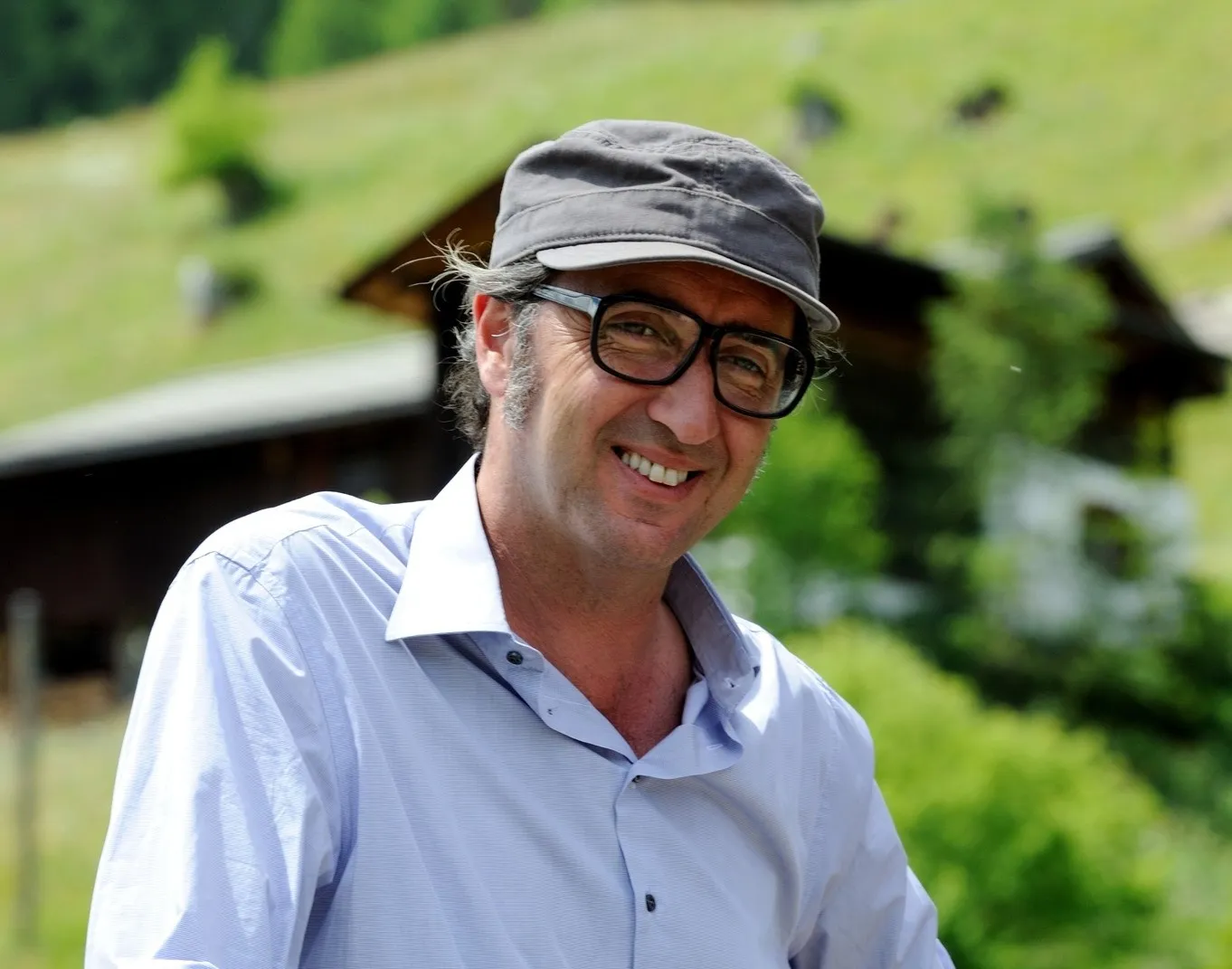
After the bold debuts in the First Time section and the music-driven films, the 33rd Days of European Film presents a major retrospective dedicated to one of the most distinctive European directors of our time – Paolo Sorrentino. The Italian filmmaker, who masterfully combines visual extravagance with deep melancholy, irony with emotion, and politics with personal drama, receives a well-deserved tribute at the festival. Whether you are discovering Sorrentino for the first time or know his work by heart, this retrospective offers a unique opportunity to immerse yourself in his world.
Who is Paolo Sorrentino?
Paolo Sorrentino was born in 1970 in Naples. His life was marked by tragedy – at the age of fifteen, he lost both parents in an earthquake. This experience later became a recurring motif of loss, loneliness, and the search for meaning in many of his films. After early short films and television work, he made his feature debut with L’uomo in più (2001) and quickly established himself as one of Italy’s most watched directors.
His breakthrough came with The Divine (Il Divo, 2008), a stylized political biography of Giulio Andreotti, which won the Jury Prize in Cannes. Five years later, The Great Beauty (La Grande Bellezza, 2013) brought him an Oscar for Best Foreign Language Film and catapulted him into the global spotlight.
Key Films in the Retrospective
The festival screens several cornerstone titles that map Sorrentino’s career:
The Divine (Il Divo, 2008)
A brilliant, highly stylized portrait of the controversial Italian politician Giulio Andreotti. This is where Sorrentino fully unveiled his unique style – rapid editing, opulent cinematography, and sharp black humour.
The Great Beauty (La Grande Bellezza, 2013)
Oscar winner for Best Foreign Language Film. A Fellini-esque fresco about ageing writer Jep Gambardella drifting through decadent Roman high society. A film about beauty, emptiness, and the search for meaning in life.
This Must Be the Place (This Must Be the Place, 2011)
An unexpected road movie starring Sean Penn as a faded rock star who sets out to find a Nazi war criminal. Strange, melancholic, and visually hypnotic.
Youth (Youth, 2015)
An intimate drama set in a luxurious Swiss hotel. Michael Caine and Harvey Keitel play two ageing artists reflecting on their lives. One of the most touching films about ageing in recent years.
Grace (La Grazia, 2025)
Sorrentino’s latest film starring Toni Servillo. A parabolic story about an Italian president facing complex ethical decisions. The film once again confirms his ability to blend politics with existential questions.
Sorrentino’s Unmistakable Style
What makes Sorrentino instantly recognizable? Opulent, almost painterly cinematography (long-time collaboration with cinematographer Luca Bigazzi), masterful use of music (from classical to pop and electronic), slow-motion shots, and the constant contrast between visual splendour and inner emptiness. His films often feel like dreams – beautiful yet unsettling. The aesthetic is never self-indulgent; behind the gloss lies a profound critique of society, power, and human fragility.
Sorrentino builds on the great Italian tradition (Fellini, Antonioni) while bringing a contemporary, global perspective.
Themes That Define Him
Recurring motifs in Sorrentino’s work include the emptiness of power, ageing and the loss of vitality, loneliness in a crowd, and the search for transcendence in a secular world. He often portrays Italy as a theatre – a country full of beauty, yet also decadence and pretence. His most personal film, The Hand of God (The Hand of God, 2021), draws directly from the tragedy of his youth and celebrates Naples as a place that shapes a person.
Sorrentino on the Small Screen
Fans of television series will appreciate his venture into TV. The Young Pope (The Young Pope, 2016) and The New Pope (The New Pope, 2020), starring Jude Law and John Malkovich, are visually and thematically fully in his style – opulent, ironic, mystical, and provocative. He proved that even on the small screen he can create a cinematic experience and deepen the exploration of faith, power, and human weakness.
What You Can See at the Festival
In addition to the film screenings, Sorrentino’s long-time editor Cristiano Travaglioli will visit Prague. He will introduce several films and lead a masterclass – a great opportunity to look behind the scenes of one of today’s most distinctive auteurs.
The tribute to Paolo Sorrentino is perfect for anyone who wants to experience cinema at its most powerful – visually stunning, emotionally deep, and intellectually stimulating. Whether you are a beginner or a long-time admirer, these films will stay with you.
Which Sorrentino film are you most looking forward to? Check the full programme and screening times at eurofilmfest.cz. The festival runs from 9 to 19 April 2026 in Prague, Brno, Ostrava, and other cities.